If there is one piece of equipment that affects comfort in almost every sport, it is footwear. Rackets, balls and bikes can be borrowed. Shoes need to fit your feet, and the right type for one sport can be the wrong type for another.
Start with the right type of shoe
Before thinking about size, match the shoe to the movement. Different sports load the foot in different directions:
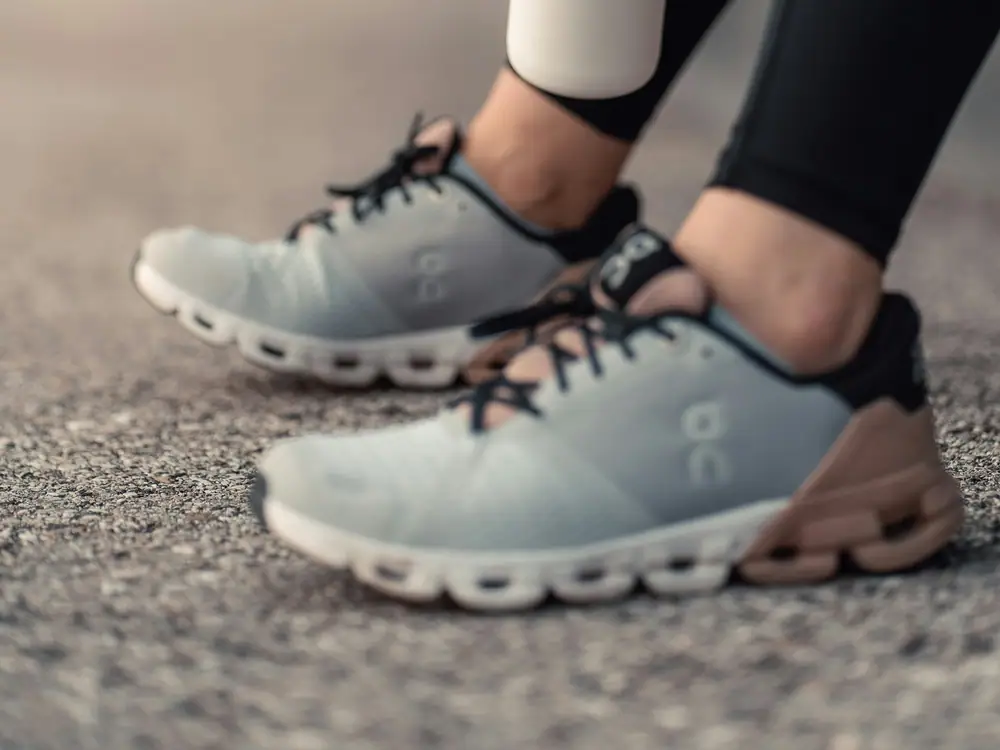
- Running shoes are built for repeated forward motion, with cushioning under the heel and forefoot.
- Court shoes for tennis and pickleball have flatter, tougher soles and firmer sides to support lateral movement.
- Basketball shoes add grip for sharp stops and support around the ankle for jumping and landing.
- Football boots use studs or patterned soles chosen for the pitch surface.
Wearing running shoes for tennis is one of the most common beginner mistakes. The soft, raised heel can roll when you push sideways.
When and how to try them on
Feet swell during the day and during exercise, so try shoes on in the afternoon or after activity. Wear the socks you will play in. Bring any insoles or orthotics you use. Then:
- Lace the shoe fully, starting from the bottom eyelet.
- Stand up and put weight on both feet.
- Walk, then jog, and if the shop allows it, perform the movement of your sport: side shuffles, quick stops, a small jump.
Five fit checks
| Check | Good fit | Poor fit |
|---|---|---|
| Length | About a thumb's width of space in front of the longest toe (less for football boots) | Toes touch the end, or there is a large gap |
| Width | Foot sits flat on the insole without spilling over | Pinching at the little toe or ball of the foot |
| Heel | Minimal slipping as you walk and jog | Heel lifts noticeably |
| Instep | Even pressure from the laces | A single tight spot or numbness |
| Flex point | Shoe bends where your foot bends | Shoe bends in the middle of the arch |
The size on the box is a starting point, not an answer. Two shoes in the same size can fit very differently.
If you are between sizes
UK shoe boxes usually show UK, EU and US sizes side by side, but the conversions are not identical from brand to brand, so go by how the shoe fits rather than which number you usually buy. Try both sizes and, where available, a wide fitting. For running shoes, many people prefer the slightly larger size to allow for swelling on longer runs. For court shoes and boots, a snugger fit usually feels more secure, as long as toes are not jammed against the end. Lacing techniques can also help: a "heel lock" using the top eyelets reduces heel slip without tightening the whole shoe.
Sizing for growing feet
Children's feet grow quickly, and it is tempting to buy a size up so shoes last longer. A small allowance is sensible, but shoes that are too big make a child trip, slide and blister. Check fit every few months and pass on outgrown shoes to younger players.
When to replace
Replace shoes when the outsole is worn smooth in key areas, when cushioning feels flat, or when the upper no longer holds the foot securely. Many runners notice aches returning when their shoes are worn out, which is a useful early signal.
Socks, insoles and orthotics
The sock you wear changes the fit of the shoe more than most people expect. A thick cushioned sock can take up half a size compared with a thin technical one, so always try shoes with the socks you intend to play in. Synthetic and wool blends manage sweat better than cotton, which helps prevent blisters.
If you use orthotics or custom insoles, bring them when you shop and swap them in for the shoe's own insole before testing. Some shoes have removable insoles that make this easy; others have a fixed footbed that leaves less room. If you have a history of foot pain, a health professional or specialist fitter is the right person to advise on support, rather than a general guide like this one.
The short version
- Choose the right shoe type for the sport before choosing a size.
- Shop later in the day, with your sport socks on.
- Test length, width, heel, instep and flex point.
- Move like you will in your sport before you buy.
- Replace worn shoes rather than pushing through discomfort.
For sport-specific sizing tables, see the fit guide on each starter kit page.