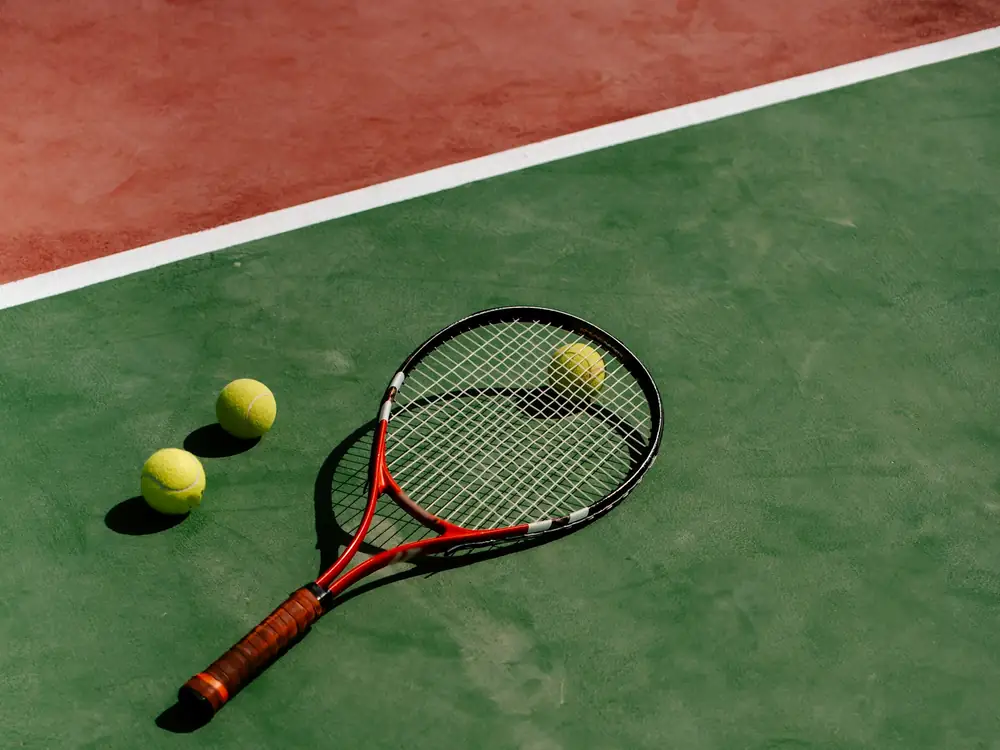
Most beginners overthink the racket and underthink the shoes. A mid-weight, forgiving racket with the right grip size will carry you through your first year of lessons and social hitting. Running shoes, on the other hand, are designed for straight-line movement and can roll on the lateral cuts tennis demands. If you only get one thing "right" before your first hit, make it footwear.
This kit assumes you are an adult or teen starting with group lessons, a club taster session, or casual games at a public court. Juniors follow the same logic with shorter rackets and lower-compression balls, and we cover that in the fit table below.
Essentials checklist
Tick items off as you sort them. Your ticks are saved in this browser only.
Play
Wear
Bag & body
Fit and size guide
Grip size is the most important measurement. To check it, hold the racket in an eastern forehand grip: you should be able to slide the index finger of your other hand into the gap between your fingertips and the base of your palm. No gap means the grip is too small; a wide gap means it is too big.
| Player | Racket length | Grip guide | Ball type |
|---|---|---|---|
| Young children | Short junior racket (roughly waist to hip height when standing on its head) | Smallest junior grip | Red foam or low-compression |
| Older juniors | Longer junior racket; the tip should reach around the hip | Junior or smallest adult grip | Orange, then green dot |
| Teens and adults, smaller hands | Standard adult length | Smaller adult sizes (L1–L2) | Standard pressurised |
| Adults, larger hands | Standard adult length | Larger adult sizes (L3–L4) | Standard pressurised |
| Between sizes | Standard adult length | Choose the smaller size and add an overgrip | Standard pressurised |
Size ranges are general guidance. Always check the manufacturer's chart and your club or league rules.
Skip for now
These items are genuinely useful later. In a first season they mostly add cost and decisions.
- Stringing upgrades and premium stringsFactory strings are fine until you break them or notice the ball feels dead.
- Vibration dampeners and gadgetsPersonal preference; try a friend's before buying one.
- Large racket bagsA rucksack with a racket sleeve is plenty in the first season.
- A second racketOnly worth it once you play matches where a broken string would end your day.
Your first four weeks of gear
- Week 1
Borrow and feel
Use a club or coach loaner racket. Note whether the handle feels chunky or thin, and whether the head feels heavy on volleys.
- Week 2
Sort the shoes
Buy or borrow proper court shoes. Try them on in the afternoon with your playing socks, and do a few side shuffles in the shop.
- Week 3
Choose your racket
Demo two or three frames in your preferred grip size. Pick the one that feels easy to swing late in a session, not just on the first hit.
- Week 4
Fine-tune
Add an overgrip, replace dead balls, and pack a consistent bag so every session starts on time.
Rent, borrow or buy?
Tennis is one of the easiest sports to try without buying anything. Many clubs and coaches keep loaner rackets for taster sessions, and public courts often have a friend or neighbour with a spare frame gathering dust. Borrowing for the first two or three sessions tells you far more than any review: you learn whether you prefer a head-light racket that whips through, or a slightly heavier one that feels stable on the volley.
Shoes are the exception. Borrowed shoes rarely fit well, and poor fit shows up as blisters or a rolled ankle. Treat court shoes as your first real purchase.
Budget tiers, described plainly
Entry level: pre-strung recreational rackets sold in general sports shops. Often a little heavy in the head and stiff, but perfectly usable for learning. Mid-range: the previous season's model of a performance frame, frequently discounted. This is where most improving players land. Premium: current-season frames sold unstrung, so you choose the string and tension. Great for experienced players, unnecessary for a first season.
Gear care
Store rackets indoors, never in a hot car, because heat affects string tension and can soften the frame. Replace your overgrip when it turns shiny or slick. Keep balls in their sealed can until you use them, and retire them to drill duty once the bounce feels flat.
Our guides to sizing sports shoes and the first-season checklist apply to every sport.